Work Product

Representative case architectures demonstrating the structural approach across practice areas. Each profile illustrates how the hearing record is built to protect the primary claim — not just to win the federal determination.

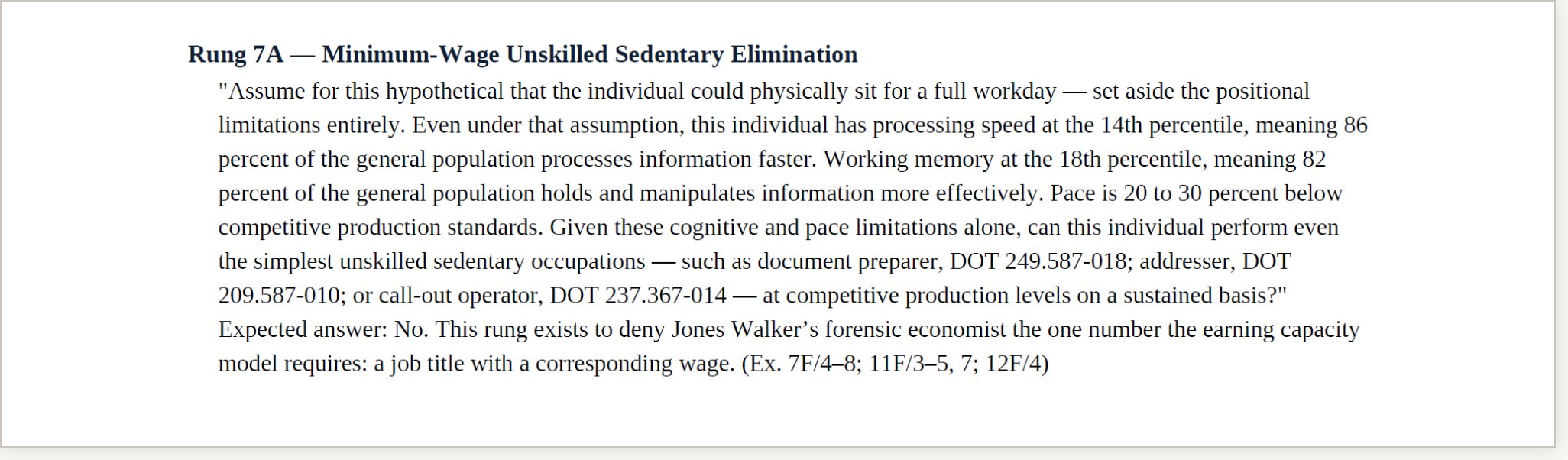
The brief is only one component. The strategic layer — the dashboard, fallback map, and containment framework — is what separates structural hearing architecture from document production.

Redacted work product samples are available on request.

WC Offset / Settlement-Critical Case

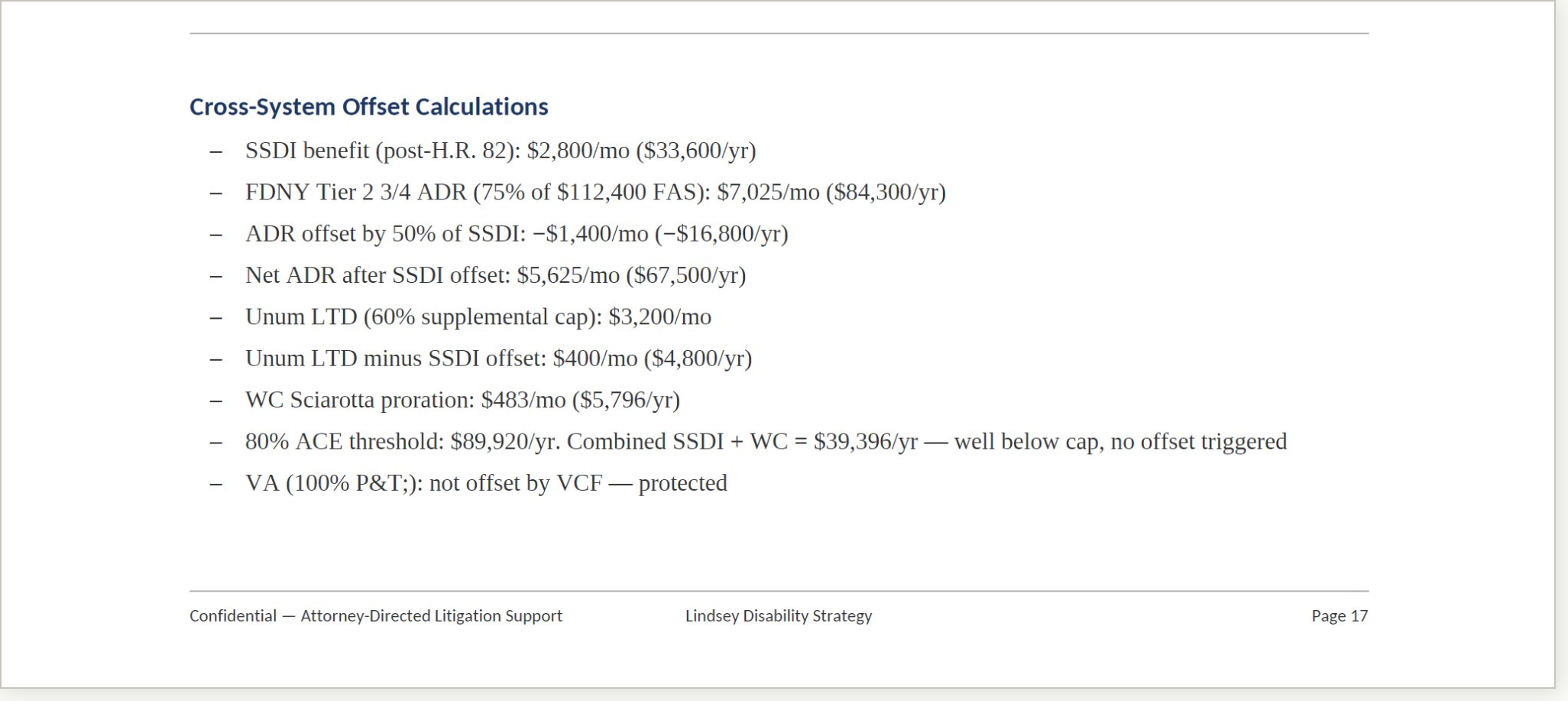
Advanced-age grid dependency with strict exertional containment. Demonstrates protective onset alignment in an offset-sensitive context and sedentary ceiling defense without conceding six-hour sitting tolerance.

What to notice: The brief frames sedentary as a ceiling, not a capacity finding. The strategy dashboard maps the carrier’s likely extraction argument and provides specific containment language. The VE fallback map preserves grid-directed disability without opening the door to vocational expansion.

Maritime / Jones Act Coordination

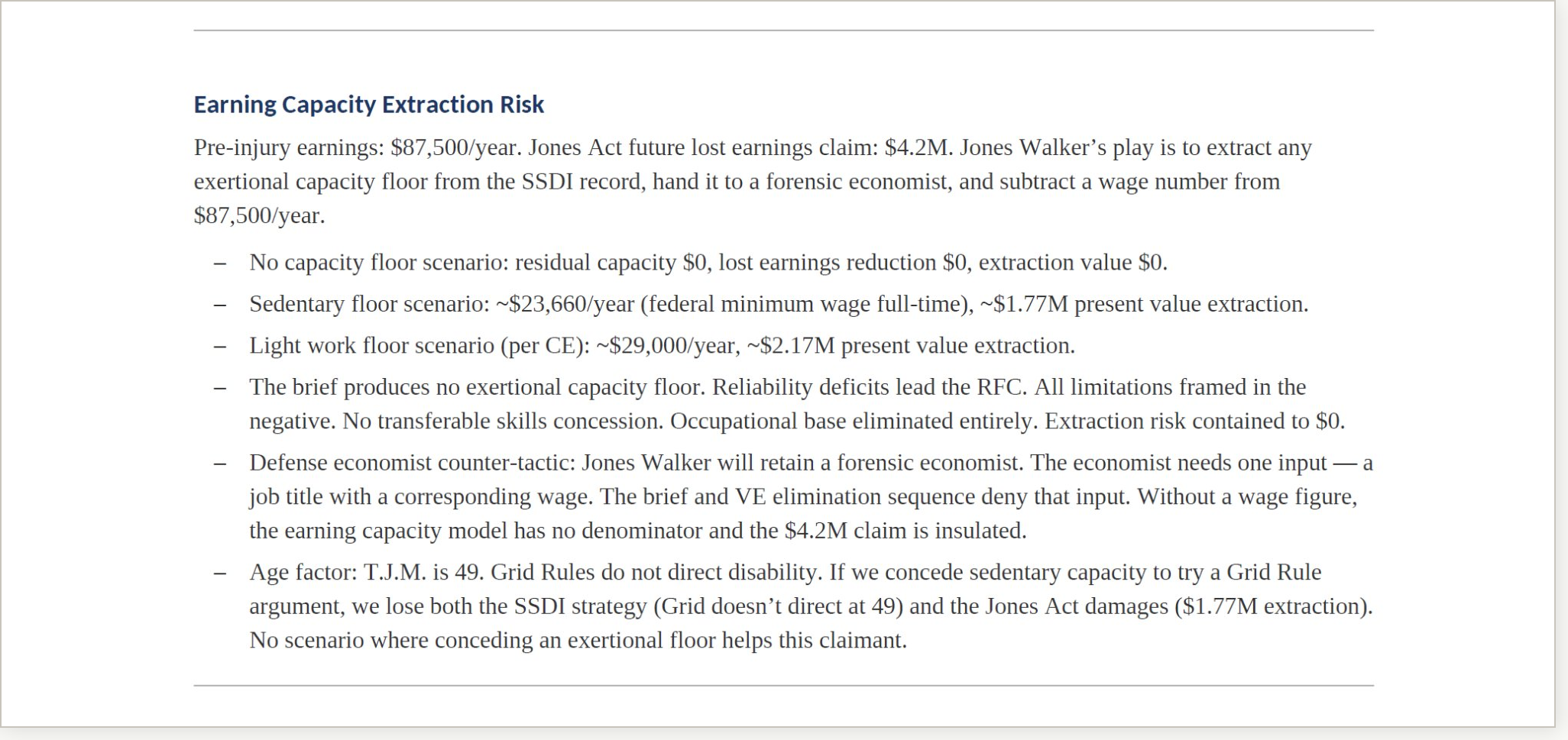
Commercial fisherman — bilateral knee meniscus tears with post-surgical chronic pain syndrome, lumbar disc herniation with radiculopathy, Major Depressive Disorder secondary to chronic pain. Active Jones Act claim with maintenance and cure in dispute. Defense has served notice of intent to subpoena the SSDI hearing record.

What to notice: The brief maps the Jones Act–SSDI collision architecture: earning capacity testimony containment, maintenance and cure language discipline, and medical causation synchronization between SSDI treating source statements and the Jones Act liability theory. Step Five elimination is built through reliability-based erosion so that no vocational finding can be converted into an earning capacity floor at trial.

ERISA / LTD Transferability Case

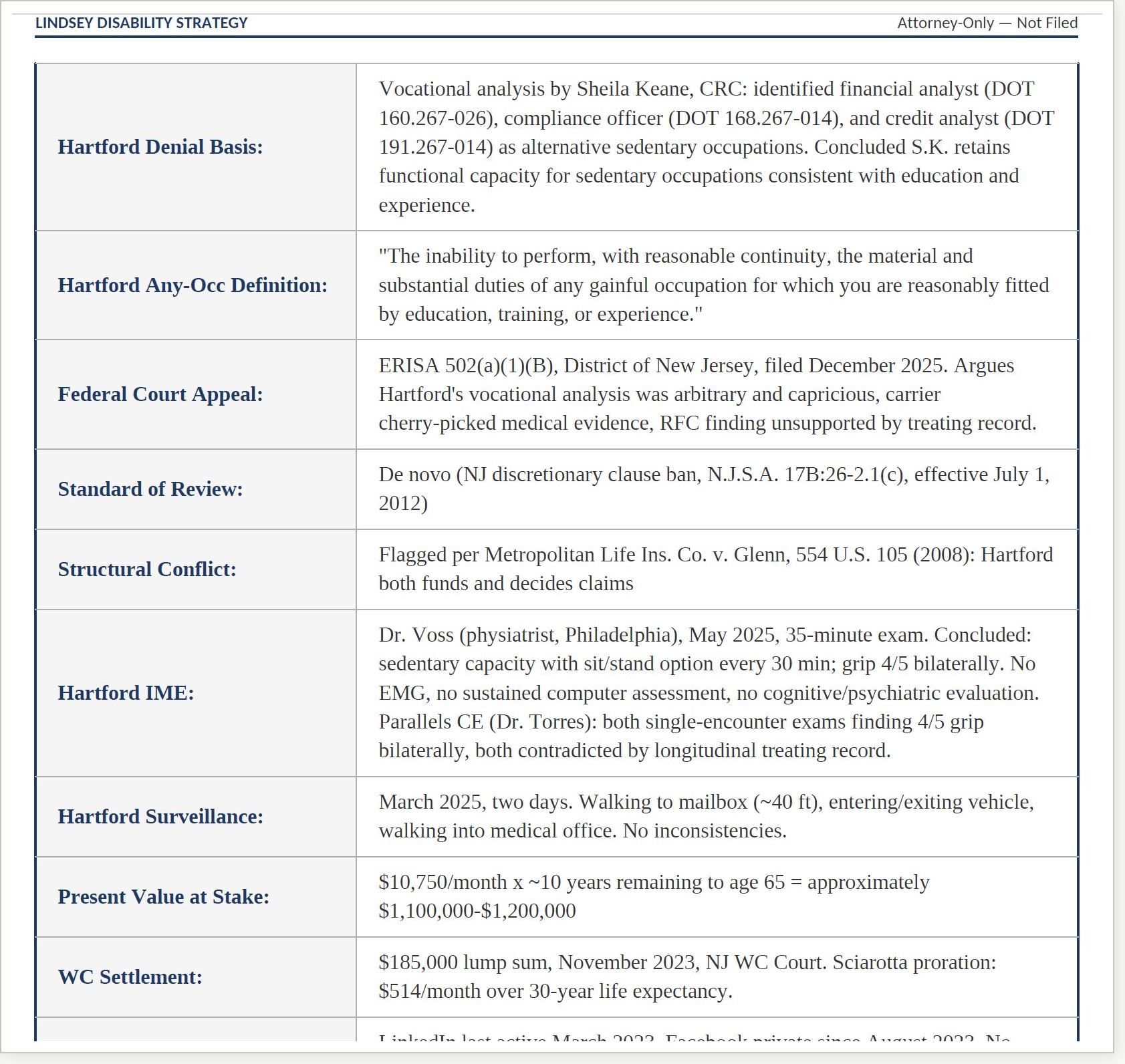
Reliability-driven elimination with carrier IME containment. Demonstrates how off-task and absenteeism findings are anchored to longitudinal treating evidence and structured to survive downstream carrier scrutiny during any-occupation transition.

What to notice: The brief separates task comprehension from sustained reliability. The strategy dashboard identifies the specific surveillance and IME findings the carrier will deploy and provides containment responses. The VE fallback map layers independent elimination paths so that discounting one axis does not collapse the case.

FELA / Railroad Retirement Board Coordination

Railroad conductor — cervical disc herniation with myelopathy, bilateral carpal tunnel syndrome, PTSD following derailment incident. Active FELA claim against Class I carrier. RRB Tier I disability benefits in pay status. Employer's retained vocational expert has been disclosed.

What to notice: The brief addresses the RRB–SSDI–FELA triangle: Tier I offset modeling under the Railroad Retirement Act, vocational testimony containment preventing SSDI findings from becoming the carrier's earning capacity ceiling, and medical language synchronization between consultative exam findings and the FELA causation theory. Step Five elimination is constructed using reliability-based erosion that establishes total disability for SSDI purposes while preserving the FELA damages theory.

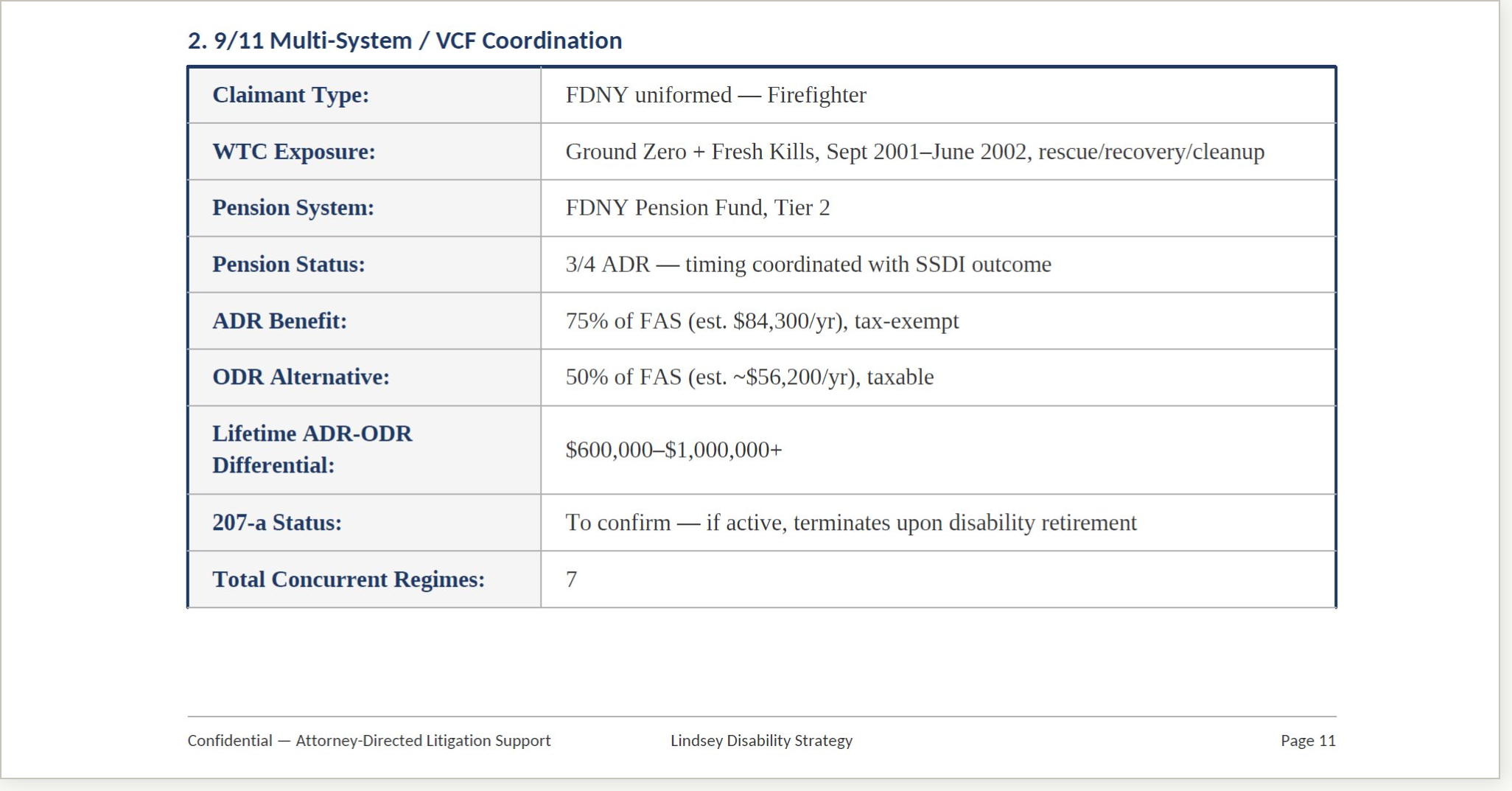
FERS Disability Retirement + SSDI Coordination

Clinical social worker (VA Medical Center, GS-12) — lumbar spondylolisthesis with L4-L5 nerve root impingement, PTSD, Major Depressive Disorder recurrent severe. Concurrent FERS disability retirement and mandatory SSDI filing. OPM reassignment exposure identified. Month-13 annuity transition approaching.

What to notice: The brief navigates the competing standards problem — OPM evaluates inability to render useful and efficient service in the specific position, while SSA evaluates inability to perform any work in the national economy. Language satisfying one standard can undermine the other. The strategy dashboard models the Year 1 to Year 2 offset cliff and maps SF-3112 narrative alignment. The VE fallback map includes a full SVP-8 transferability cross-examination script that traps the vocational expert regardless of whether they characterize the target job as low-stress or high-complexity.

Non-Exertional / Mental RFC Case

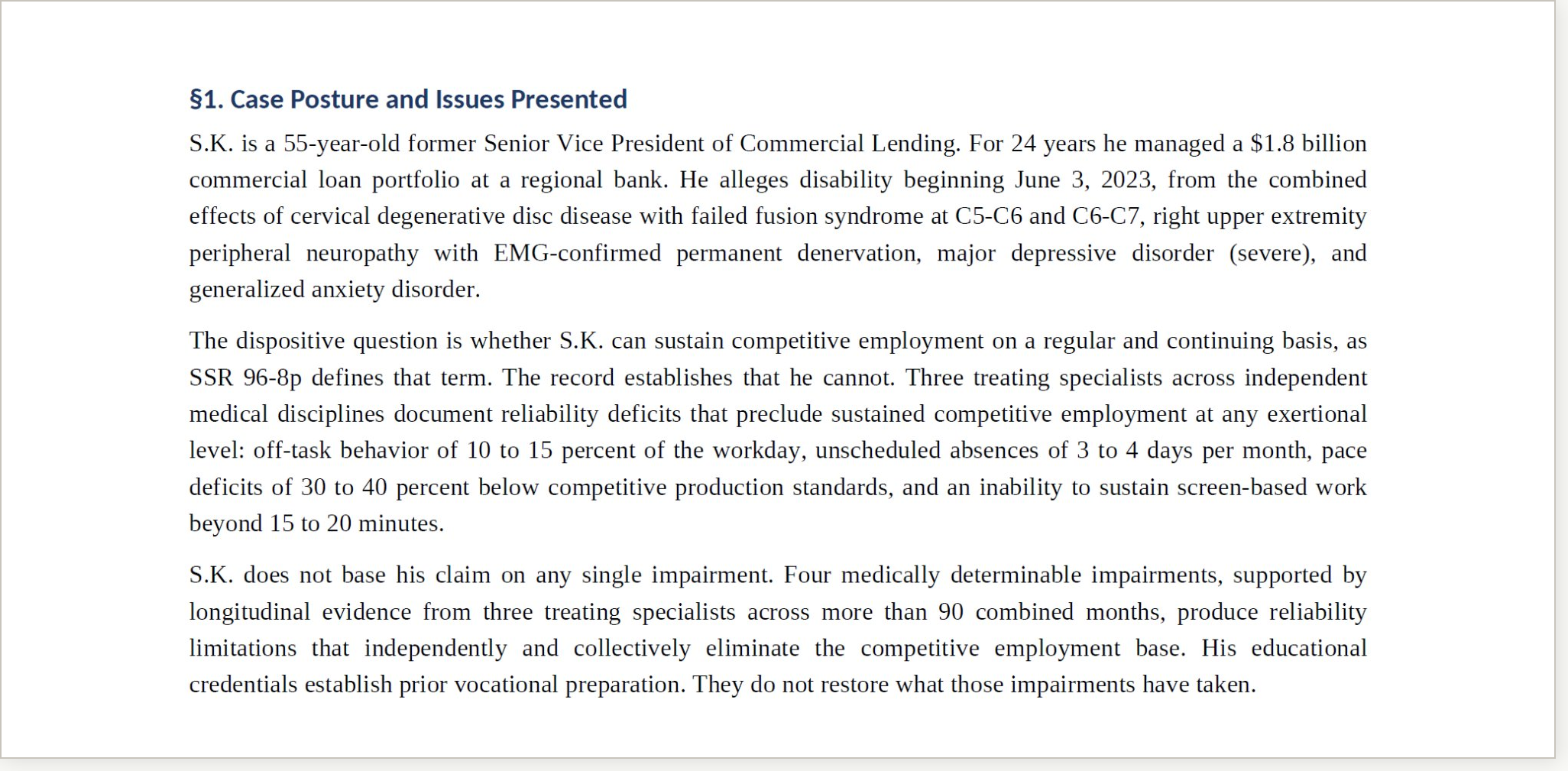
Stress intolerance case with intact consultative exam findings, skilled sedentary past work, and high educational attainment. Demonstrates how to win when the claimant looks capable on paper.

What to notice: The brief maintains strict separation between simple task capacity and sustained competitive performance. The hearing fallback map provides five independent elimination paths. The anticipated testimony guide prepares containment for every adverse fact in the record.

Request a Blueprint to map the cross-system exposure in a specific case.

Related pages
Outsourcing SSDI Hearing Briefs
Decision-Ready Package Walkthrough